Thought Trace
February–May 2025
A third-person exploration game where players collect and restore Hope Fragments across looping and linear levels inspired by anxiety, depression and OCD.
- Project
- Individual project
- Focus
- Narrative exploration · Level design

Gameplay
Collecting Hope Fragments
Collect and restore Hope Fragments to unlock progress through two levels.
Level 1 combines a repeating map with enemy pursuit. Level 2 uses a linear route and ordered puzzle tasks.
Read the gameplay breakdown
In Level 1, objects remain in the same locations across loops. Players can learn safer routes while deciding whether to collect another object or reset to escape pursuit.
Level 2 removes the chase. Progress depends on completing interactions and environmental puzzles in the required order.
Explore
Read the space and find meaningful objects.
Collect
Recover Hope Fragments under pressure.
Restore
Save restoration progress and unlock the route.
Return to explore
Design focus
Looping and linear levels
Level 1 tests route learning under pursuit; Level 2 tests the order of interactions along a linear path.
Read the level design ↗Fragment-based progression
Restoring a fragment updates progress, the UI and access to doors or paths.
Explore the systems ↗Progress across resets
The first level resets temporary chase state while retaining restoration progress.
Read the loop system ↗Level Design
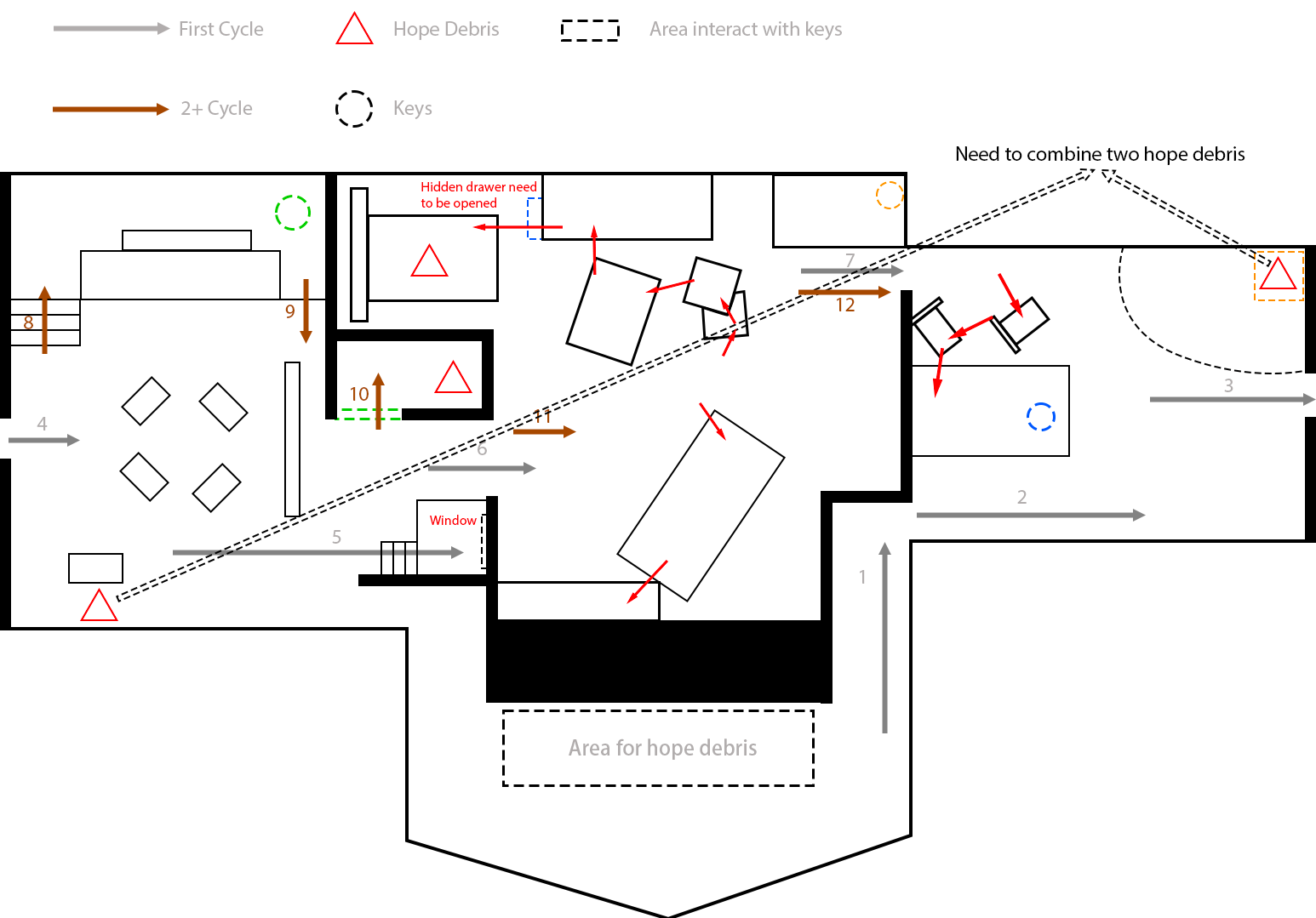
Level 1: Anxiety & Depression
Level 1 uses a looping map to represent anxiety and depression.
Players search fixed object locations under pursuit. Keeping restoration progress across resets lets them work toward completion over several attempts.
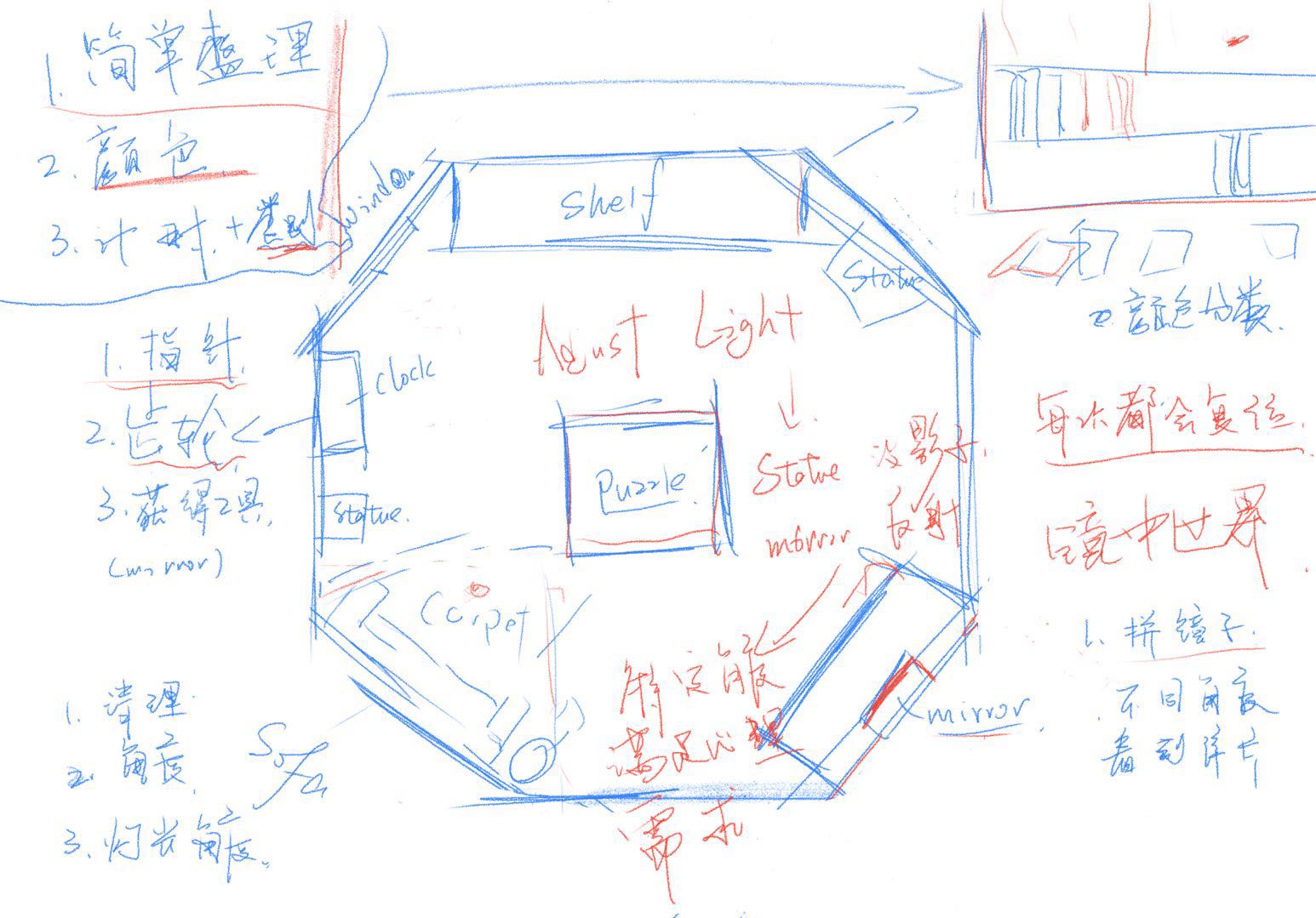
Level 2: OCD(Draft)
Level 2 represents compulsive patterns through tasks that must be completed in a specific order.
The linear layout shifts attention from avoiding an enemy to checking puzzle conditions and completing the next interaction.
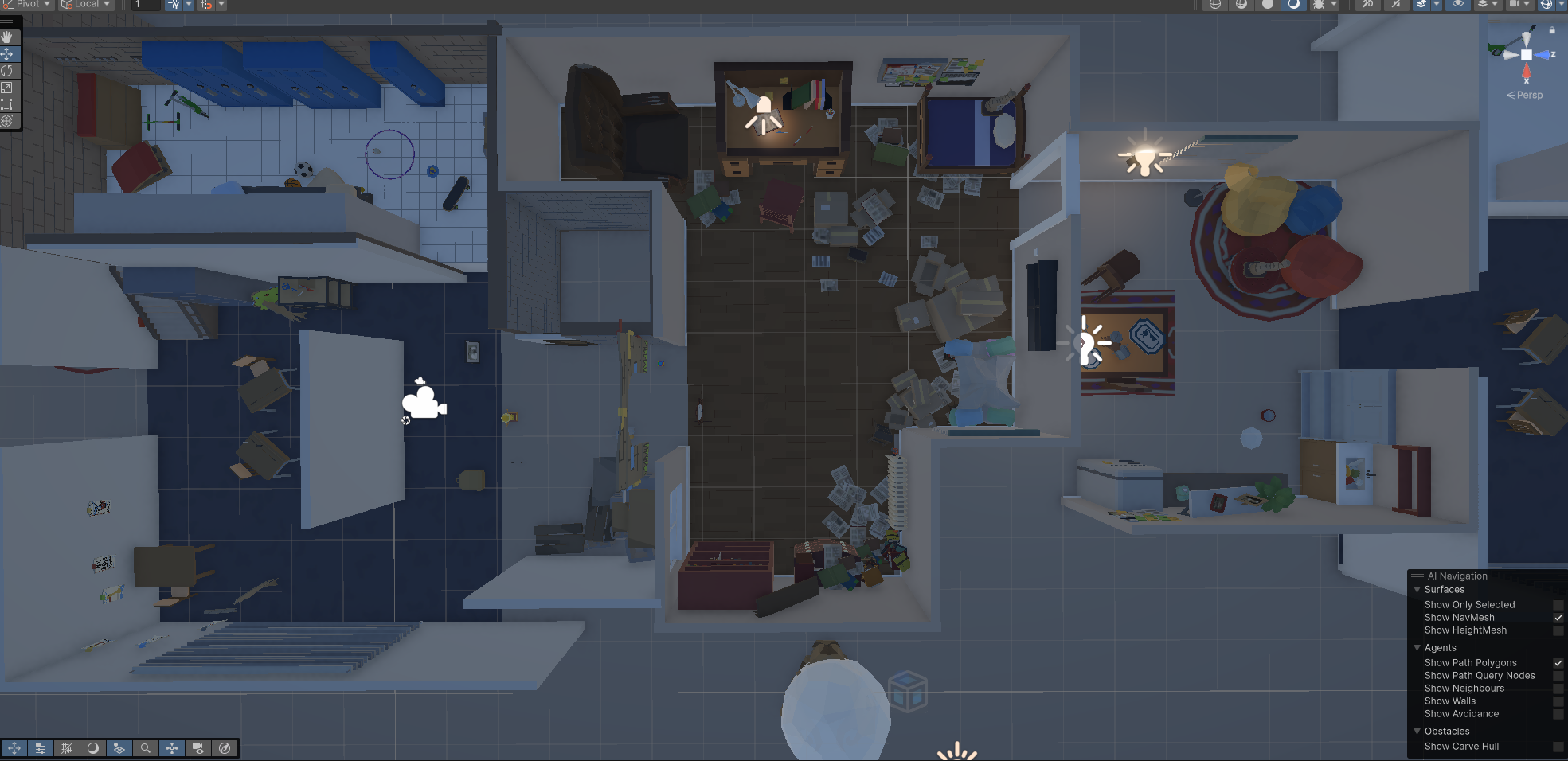
Low-poly art style
I used low-poly geometry and simplified environments to depict the character’s inner world.
Shape and color distinguish the environments and support their emotional themes.
Inspiration
I use repeating spaces and ordered tasks to represent anxiety, depression and OCD. Restoring fragments gives players a way to make progress through these environments.
Read the design intention
The design goal was to express difficult emotions through actions and spatial structure. Repeating a route suggests anxiety; checking ordered tasks suggests compulsive behavior.
Restoration provides a persistent objective across those structures. It represents gradual recovery within the narrative.
Technical implementation
Hope Fragment interactions
Each Hope Fragment reports discovery, collection and restoration events to a central progress tracker. The tracker updates the UI and unlocks doors or paths when their requirements are met, avoiding a separate progress check on every frame.
Loop reset and saved progress
A loop restart must reset the chase without erasing collected progress. I separate temporary state—enemy position, alerts and triggers—from restoration progress. Restarting clears the former and retains the latter.
Shared puzzle conditions
Level 2 reuses the interaction system with trigger chains, state flags and validation checks. These conditions enforce the task order before opening the next part of the route.
Iteration & reflection
In the looping level, a failed chase resets the threat while a restored fragment stays restored. In the linear level, the order of interactions determines when the next path opens.
Thought Trace
Back to overview ↑