

Roots of Terror is a single-player first-person horror game built in Unreal Engine 5.2, combining maze navigation, clue-driven puzzles, and an aggressive pursuit threat.
The intended runtime is ~10-15 minutes, with the primary objective being to escape the fog-covered jungle and reach a safe house on the hill.
The experience is built around helplessness and escalation: the player wakes up at a ruined camp scene and must reconstruct what happened by finding clues (including letters) while being hunted.
There is no combat—survival comes from routing, noise control, and smart movement choices under pressure.
Players explore a maze-like jungle to locate randomly generated clues/props and solve puzzles to unlock new sections of the map.
Progression is driven by hints spread across the environment, with puzzle types including password-style puzzles and minigames, plus key-gated traversal.
The monster applies constant pressure through pursuit and sound-based tracking, pushing players to balance sneaking vs sprinting (noise vs speed).
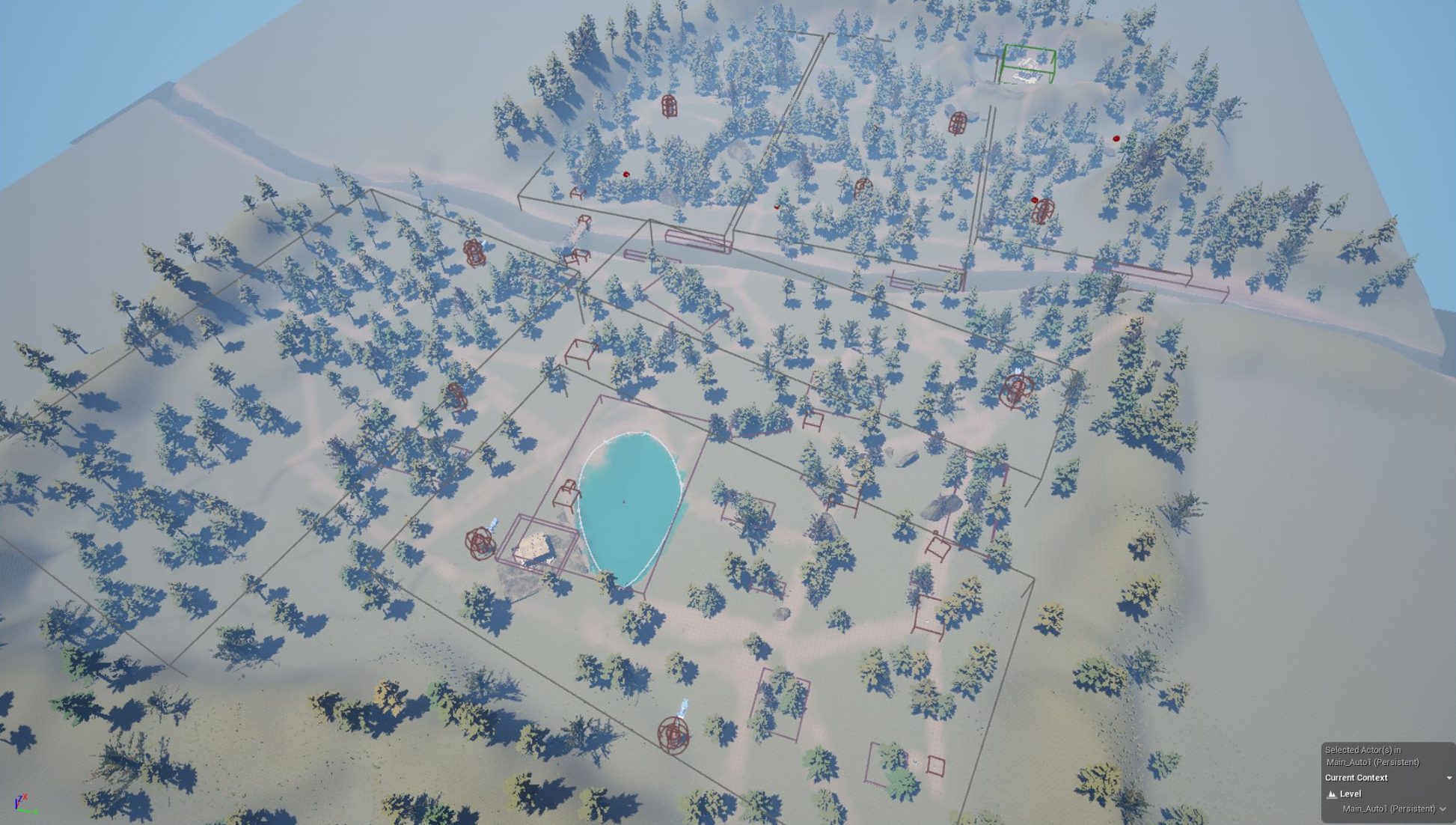
Engine / Framework: Unreal Engine 5.2, Blueprint-driven gameplay systems.
Player Movement: Walk + sneak (reduced noise) + sprint (higher noise, limited duration) to create readable risk/reward during pursuit.
Progression Systems: Random placement of clues/props, key + puzzle gating to open new sections, with puzzles including passwords and minigames.
Enemy AI: Pursuit-focused monster logic built around voice/sound tracking and encounter pressure (no combat loop).
Audio Runtime Logic: Chase music, proximity escalation beats, “spotted” sting, and environmental monster sound cues driven by gameplay state.