

Thought Trace is a game about mental illness, exploring themes of Depression, Anxiety, and OCD. The game follows Anima, a being who travels through the human psyche to heal pain and restore hope. Anima crosses into fractured mental worlds through a mirrored door and repairs broken pieces of mind within each world.
Anima received two distress signals from two people. These signals form a split mirror door that leads to their spiritual world. Anima needs to go through the mirror door and repair the broken pieces of mind in each world.
I started making Thought Trace because I wanted to turn the complicated and often overwhelming feelings tied to Depression, Anxiety, and OCD into something others could understand and connect with. Using symbolic environments and gameplay, I wanted to show how these struggles feel—how they can be repetitive, consuming, and sometimes impossible to put into words.But this game isn’t just about portraying pain. It’s about the process of healing. Each level represents a different struggle, but they all share the same goal: to make peace with what feels broken. I wanted players to feel that journey—how confronting and accepting those parts of yourself, even the messy and imperfect ones, is part of moving forward.
At its core, Thought Trace is about hope. It’s about recognizing that the process is slow and imperfect, but progress is real. I want players to feel like healing is possible, even if it doesn’t look the way they expected.
ThoughtTrace is built around collecting and restoring Hope Fragments, around moving through two distorted “mind spaces” and recover the pieces that matter. In Level 1, the map is a loop: nothing in the environment changes, but you do. The key objects tied to childhood trauma are always there—you just have to find them while being chased, learn safer routes each cycle, and make the call between pushing deeper or resetting to try again. In Level 2, the structure turns linear: the fear shifts from “getting out” to “getting it right,” mixing tense traversal with light environmental puzzles that echo anxiety and compulsive patterns. The core loop stays consistent: explore → evade pressure → collect meaningful items → piece together progress, until the world finally stops resisting.
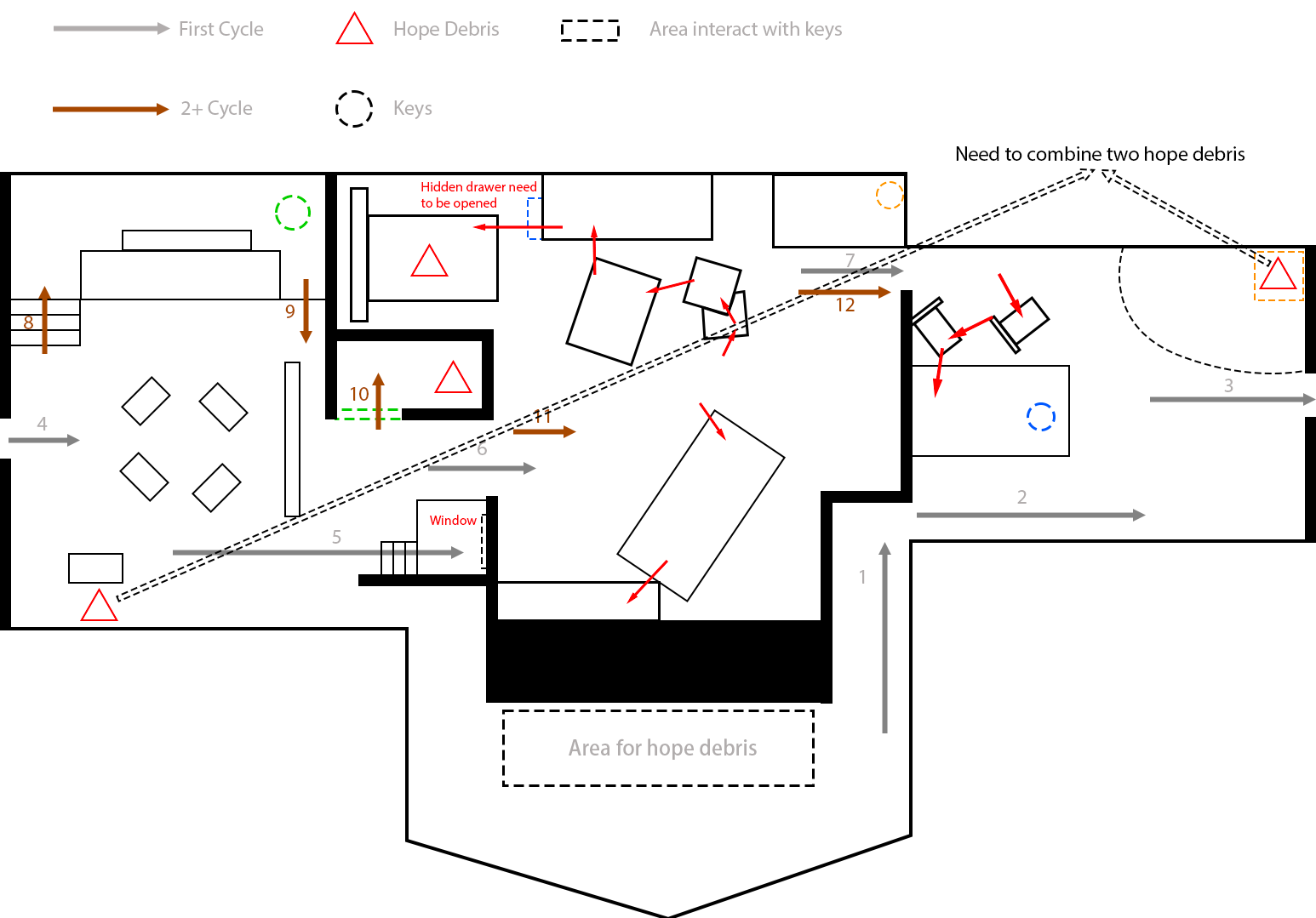
Level 1: Anxiety & Depression
Level 1 combines Depression and Anxiety within an infinite loop space.
Players must explore repeating environments, discovering and healing pain points to gradually unlock hope.
The looping structure symbolizes the repetitive struggle and eventual acceptance of past trauma.

Level 2: OCD(Draft)
Level 2 represents OCD through meticulously structured environments where players must complete tasks in a precise order.
The constant repetition and pressure for perfection highlight the struggle of obsessive thoughts, while progress is made by learning to accept imperfections and move forward.
Thought Trace features a distinctive Low Poly art style that conveys abstract mental constructs and distorted realities.
The minimalist design emphasizes mood and symbolism, using simplified shapes and vibrant colors to represent complex emotions.
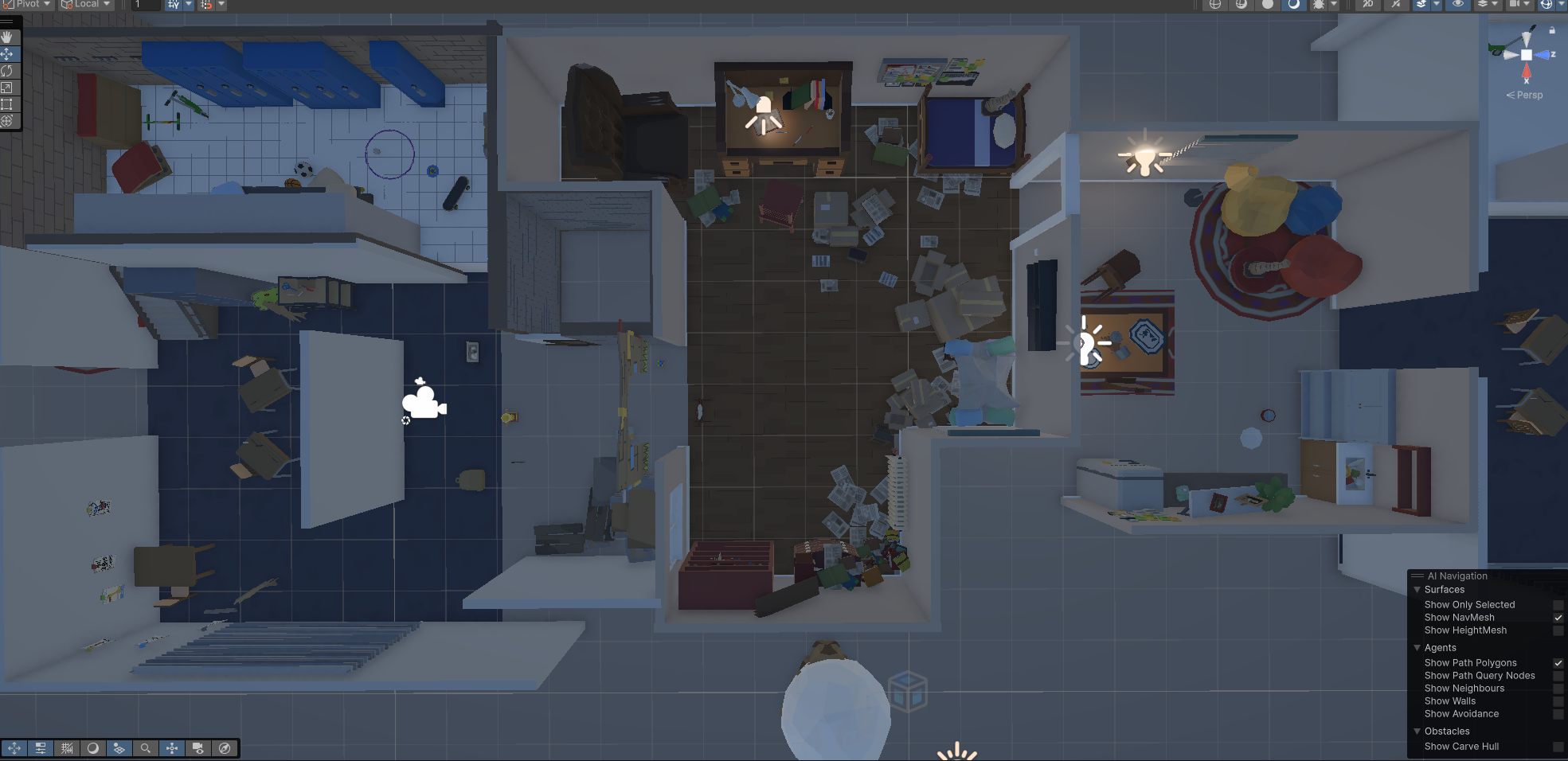

ThoughtTrace is built as a set of small, reusable gameplay systems rather than one-off scripted sequences. Hope Fragments are implemented as interactable actors with a clean event flow (discover → collect → restore), feeding into a central progress tracker that updates UI, gates doors/paths, and drives level-state changes without relying on constant per-frame polling.
Level 1’s loop is handled by resetting only runtime state (enemy position/alerts, temporary triggers, chase pressure) while keeping persistent restoration progress intact, so repetition teaches the player routes instead of feeling like a full restart.
Level 2 uses the same interaction backbone but adds lightweight puzzle conditions (trigger chains, state flags, and validation checks) to support linear progression. The chase behavior is no longer kept in this level.
The infinite loop mechanic, enemy chase system, and object interaction features have been completed. Players can explore the looping environment, evade enemies, and interact with key props to progress.
Next Steps: Refine the environment design, enhance visual details, and conduct testing for the first level to ensure smooth gameplay and effective storytelling.