FPS 2v2 Map
A Call of Duty-style 2v2 map set at a border checkpoint. I revised the routes and cover after playtests exposed confusing crossfires and restricted movement.
- Project
- Personal project
- Engine
- Unreal Engine 5
Player routes & choices
Two options at a junction
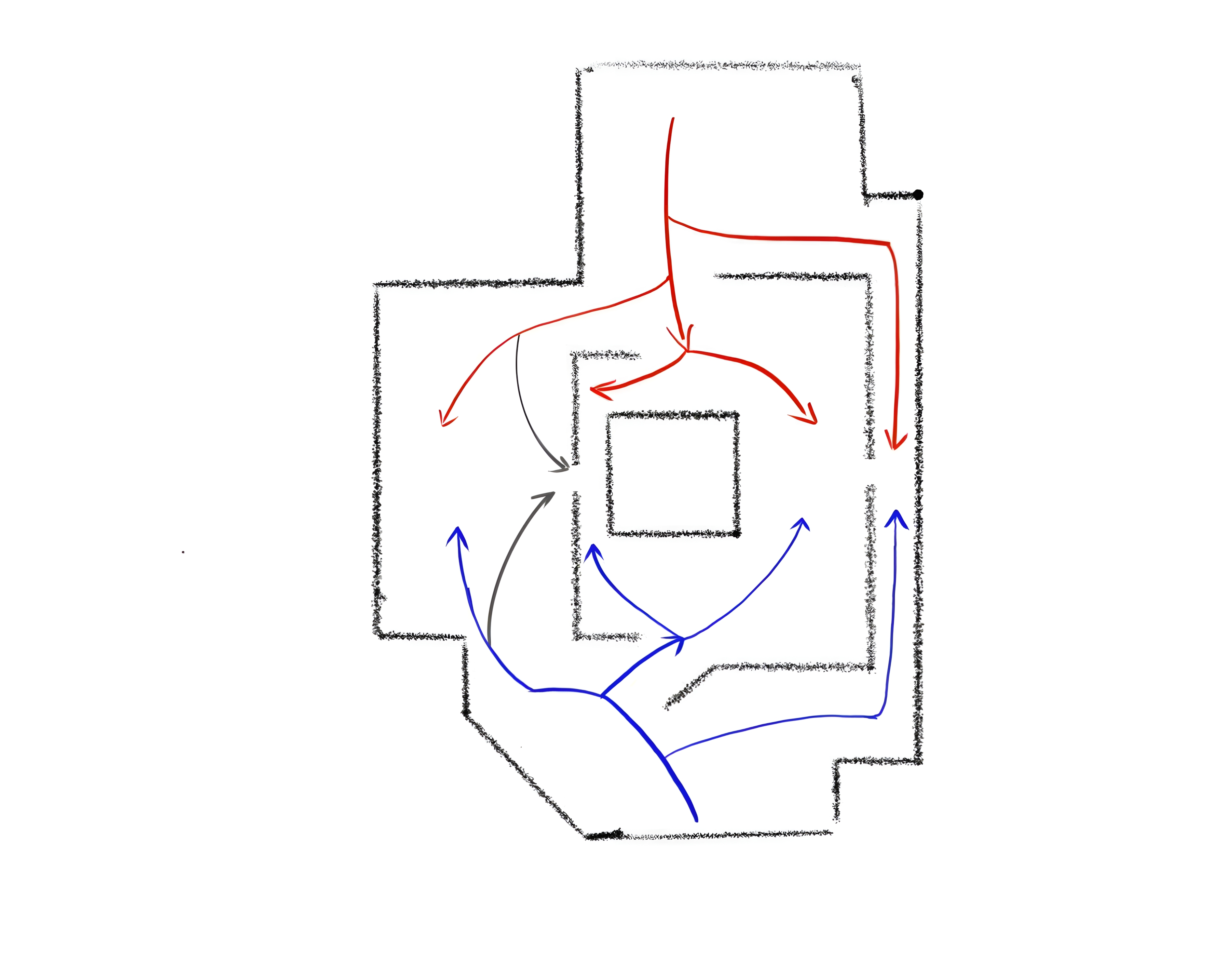
I lengthened the footprint and revised the routes so most decision points offered two clear options: commit to the current lane or rotate. This reduced the number of paths a player had to assess at once.
The distinction is between routes across the whole map and choices visible at one moment. The layout keeps alternative approaches, while the local decision is easier to read.
What the player weighs
The sketch traces opposing approaches around the central block and along the outer route. Connections between these paths create opportunities to continue forward or change approach.
At a junction, the choice is not just left or right. It changes where pressure comes from, which sightline needs attention and whether the player continues the current engagement or moves to another approach.
Continue the lane
Keep pressure on the current approach and use the next piece of cover.
Trade-off Stay in the same engagement and remain exposed to the angles along that lane.
Rotate
Leave the current exchange and approach from a different route.
Trade-off Spend time changing position, then read the next sightline before re-engaging.
Read the approach
Locate the next cover and the angle ahead.
Commit or rotate
Choose whether to keep pressure or change approach.
Read the next angle
Reassess exposure as the route opens into another space.
Return to read the approach
Movement space and cover
The early blockout combined too many route choices with dense cover. I addressed both together: simplify the local route decision, then leave room for slides, dives and re-peeks. The aim was to let players act on a route choice without immediately getting constrained by another obstacle.
Brainstorm
The brief was a compact Call of Duty-style 2v2 map set at a border checkpoint and freight yard. Inspection lanes, rail tracks and containers provide routes, cover and recognizable landmarks.
Read the brainstorm notes
I used a desert border-facility reference: sand-colored concrete, enclosed compounds, inspection gates, shade canopies and bilingual warning signs. Concrete, asphalt and gravel distinguish the traffic areas.
The setting is a trade checkpoint disrupted by conflict. Sealed lanes, temporary storage and damaged inspection equipment explain the barriers used in the combat layout.
Setting
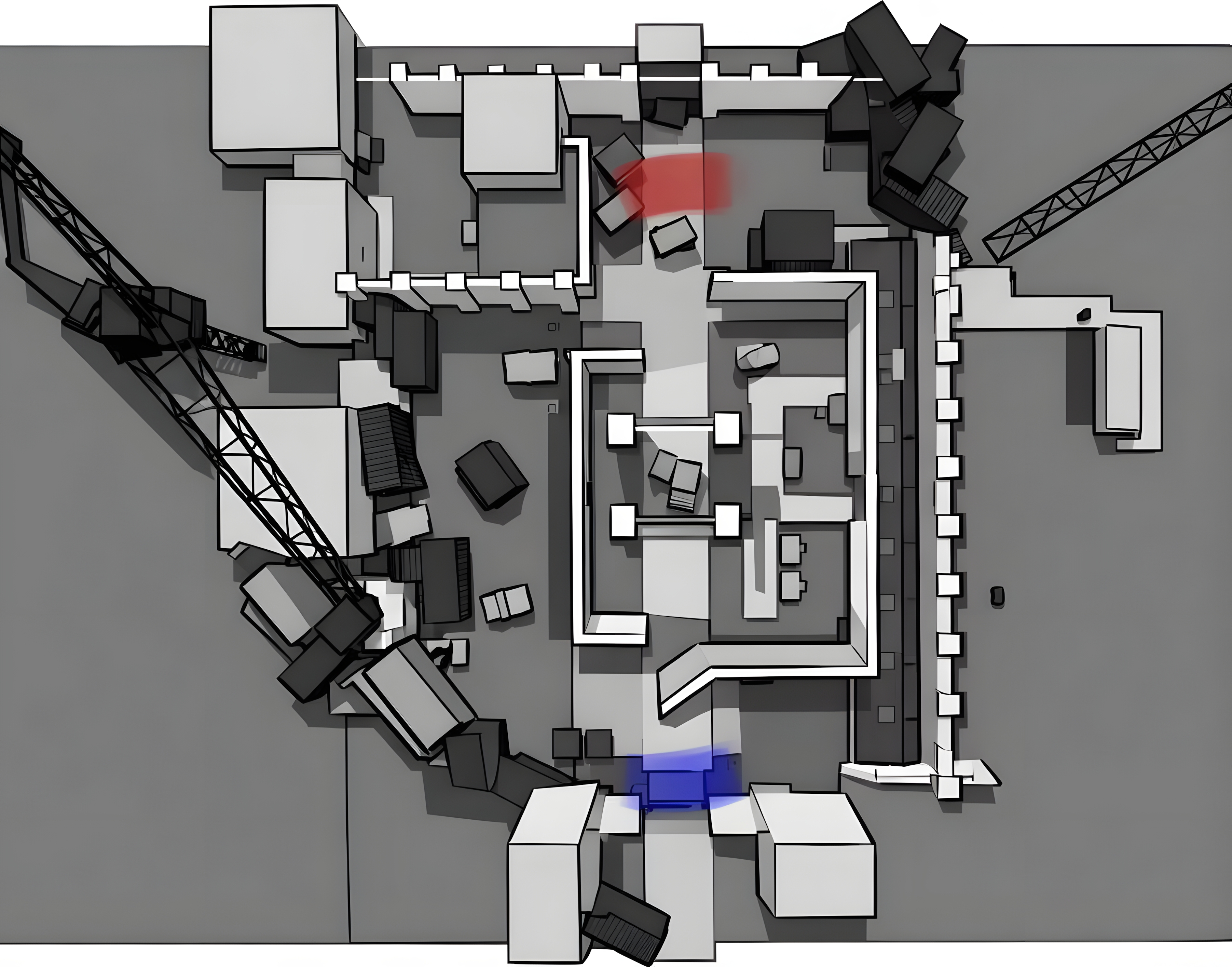
The checkpoint and freight-yard references guide the map’s scale and cover placement. Containers, gates and gantries divide the lanes and provide landmarks for navigation.
Map Layout
The whitebox explores primary and secondary routes through the checkpoint.
Iteration
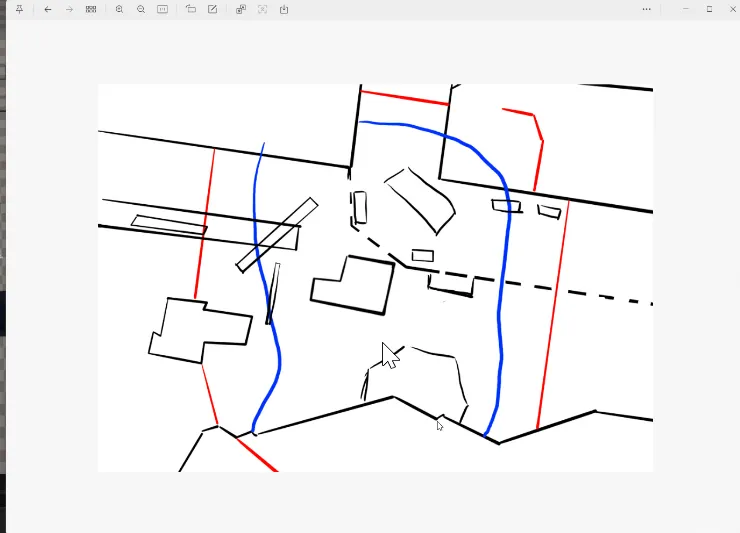
Early playtests exposed two problems: too many competing routes and excessive cover density. Players faced unpredictable crossfires, and the blockout left too little room for slides, dives and re-peeks.
Read the iteration notes
I removed cover clutter and opened selected spaces for movement while retaining cover along key sightlines. The revision addresses the observed routing and movement problems; further playtests are needed to assess balance.
FPS 2v2 Map
Back to overview ↑