SERIOUS GAME / EDULEARN 2026
Emergency
Knowing the rule.
Making the decision.
A hotel becomes a place to rehearse the unexpected. Explore, interpret environmental cues and respond to fire or earthquake scenarios in a browser-based learning simulation.
 Unity · WebGLAcademic team projectPurdue University
01 / INSPIRATION
From instructions
to experience.
Emergency education often asks people to remember instructions without giving them a safe place to practice. This project explores that gap through an unfamiliar high-rise hotel, where the same environment can call for different decisions.
02 / GAMEPLAY
One place. Different conditions.
Choose Fire, Earthquake or Random. In Random mode, identifying the emergency is part of the experience. The paper describes four scenario variants: two disaster types, each with an early-warning or an already-escalated situation.
Observe
Read the room, notice cues and identify potential hazards.
Assess
Interpret the disaster and the conditions around the player.
Respond
Explore the scenario's evacuation or sheltering branch.
Reconstructed gameplay flow from the paper; a design explanation rather than real-world emergency guidance.
03 / TECHNICAL IMPLEMENTATION
Learning, attached
to the environment.
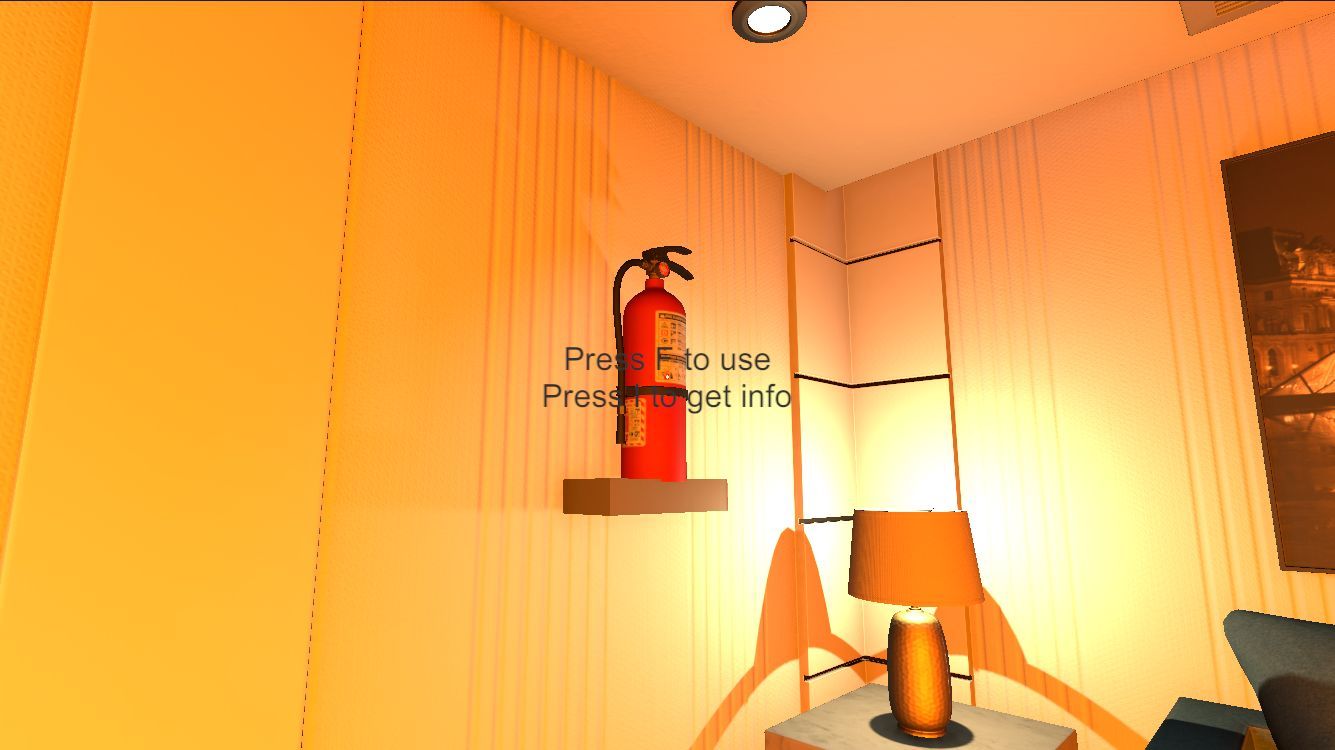
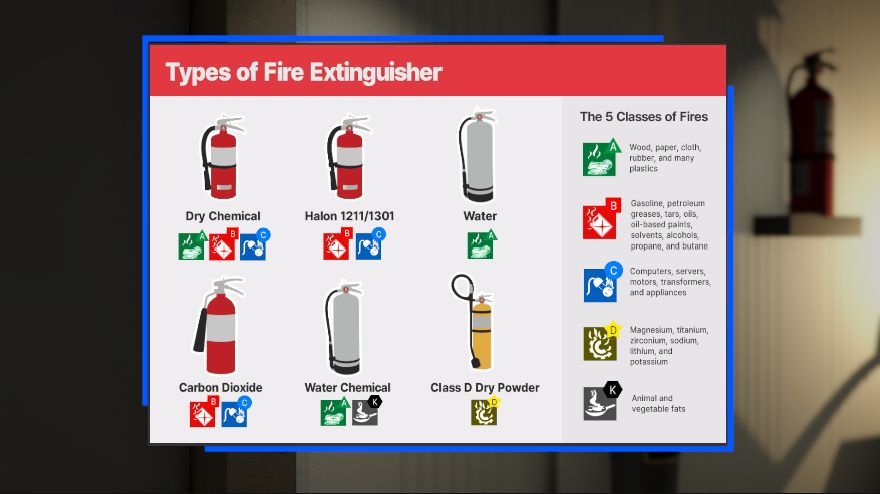
The team built the prototype in Unity and exported it to WebGL. Object-based information connects the hotel environment to educational content: looking at a supported object reveals a prompt, and pressing I opens a more detailed information panel.
The project used iterative sprints, starting with player control, a hotel environment and an educational information display, then refining feedback and presentation.
04 / LEVEL DESIGN
A familiar building,
an unfamiliar situation.
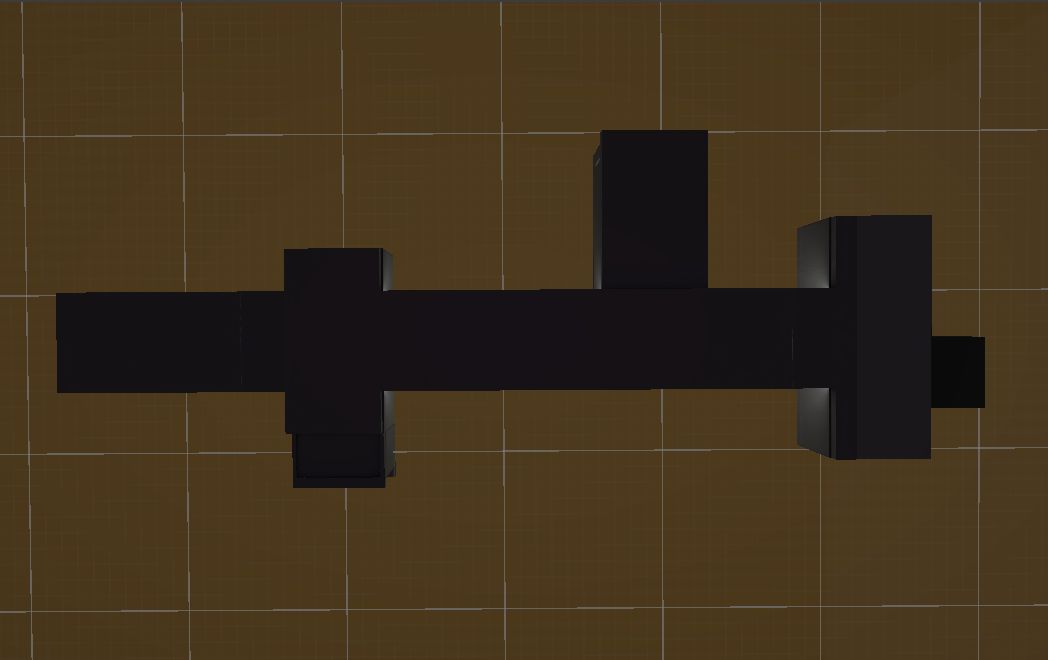
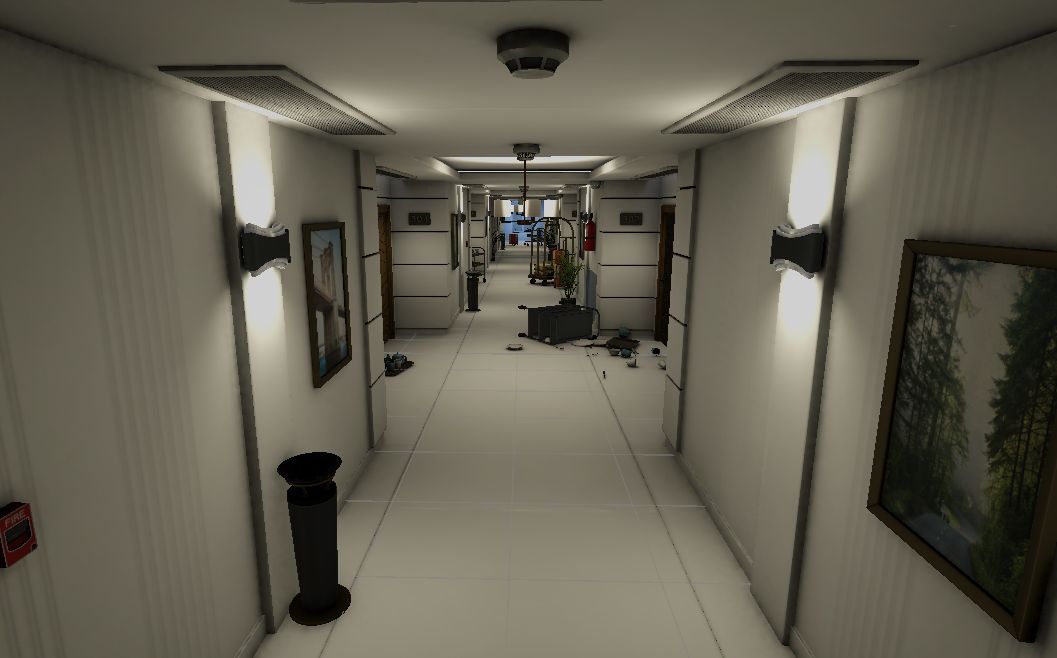
Inspired by Purdue residence halls and adapted into a hotel, the environment links a starting room, a connecting hallway and an elevator lobby. Reusing this setting across disaster types makes the changing context central to the learning experience.
Conceptual spatial diagram redrawn for this portfolio. Not a measured floor plan or an evacuation route.
05 / RESEARCH & REFLECTION
A working prototype.
An open research question.
The paper reports a functional browser-based prototype and internal demonstrations. Formal participant evaluation was planned as future work; improvements in learning, retention or real-world response have not yet been established by a user study.
Future directions include participant studies, learning analytics, guided walkthroughs and additional disaster scenarios. These are research directions, not claims about features already implemented.
Adaptive Scenario Simulation for Emergency Preparedness Education: A Serious Game–Based Training Approach
Y. Lee, H. Yu, Y. Li, A. Harwadekar, Z. Wang, G. Pappas
Purdue University, United States